Monday, July 29, 2019

#269 SHADED PAIN by L.S.U. (1987)

SHADED PAIN by L.S.U. (1987)
Frontline Records - RO9024


Producer:
Chris Brigandi


File Under: Rock/Goth Rock


Time Capsule-Worthy Track:
Die Baby Die


Whoa...who turned out the lights?


Some say 1987 is the year Christian rock went dark. This album by L.S.U. is said to be greatly responsible for that power outage. (Heck, even Russ Taff's music took a darker turn in '87.) 


Us Kids (1981); Dream Life (1983);
A Kiss of Life (1986); Shaded Pain (1987)


Shaded Pain was L.S.U.'s fourth studio recording and did indeed take a darker, more gothic rock direction from not just CCM in general, but from their own earlier albums. The record contained what has been described as "bleak, introspective, death-obsessed lyrics" that were allowed to just lay there. No moral of the story was presented, no painful storylines were resolved, no answers or solutions given. "When Shaded Pain came out, I was basically banned from playing many churches for two years," Mike Knott said in an interview with True Tunes. "They were too taken back by the darker tone of the album." It's been claimed that tons of Christian bookstores returned the album to the label because of the negative tone of the lyrics (not sure how the so-called Mom & Pop bookstore owners would know unless they opened a copy and listened to it, which seems unlikely). 


The knottheads website says, "This is the place where [Knott] stepped out of the constraints of CCM music and began doing what he wanted to. Shaded Pain is dark, honest and realistic about the struggles that Christians face in life. This type of brutal reality was unheard of in Christian music at the time it came out. Shaded Pain changed all of that as it influenced countless bands to be real with their lives – not just give cookie-cutter answers for all of life’s problems." One reviewer wrote, "At a time when Christian 'music' would only sing songs that had to reference Jesus in every lyric and were all about feelings of light and goodness and happy faces, Knott & Co. came in and banged on the church doors and shouted about the toils, trials, and dark places that so many people really lived in and struggled with." 


Wow. A lot to unpack there. First, Shaded Pain is by no means the first Christian album to ever discuss struggles and challenges. For proof, just listen to a song called Why Don't You Look Into Jesus by Larry Norman from back in 1972. And there were many, many others by lots of different artists. And anyone who thinks that there was an expectation that the name of Jesus had to be mentioned in every song in 1987 either has a faulty memory or wasn't there to know what he's talking about. Again, I could give countless examples. Now, did Shaded Pain kick up the negativity a few notches? It certainly did. But for me, the fact that the record offers no real hope or solutions is not a badge of honor...it's problematic. Does every song need to be resolved into a happily-ever-after scenario by the end of the tune? Absolutely not. But it's my personal opinion that a Christian artist should offer hope and encouragement in his or her lyrics, in at least a few songs, based on the Truth of God's Word. Not "cookie-cutter answers" (as knottheads.com puts it) but solid, Biblical principles. 


Yes, there was a lot of naivete in the early days of the Jesus Movement. Much of the acoustic-based Jesus Music in the 70s presented an unrealistic picture of how Jesus would simply come into your life and take away your problems, one by one. That approach was also problematic. I guess what I favor is some sort of compromise between these two extremes. It's been said that Shaded Pain recalled a "hollow, threatening darkness" and that Michael Knott moaned "like a prophet of doom." The Wikipedia entry on this album says, "There is not much absolution on Shaded Pain, just endless emptiness." Well, praise the Lord!


Brian Doidge got saved at age 14 at The Mother Ship - Calvary Chapel in Costa Mesa, California. Brian talked about how his faith intersected with his music in an interview with downthelinezine.com. "That was back when the whole punk rock thing hit, I cut off all my surfer hair, and I got the look of the Sex Pistols. Some of my friends and I got really involved in church and in the born-again movement, but we wanted to be like The Ramones and The Sex Pistols, so we started a band." 


Christian rock had been a thing for about a decade or so, but there weren't yet many Christian punk bands around. "Yeah, there was this 70’s rock, Daniel Amos and Randy Stonehill," Doidge remembers, "but this was like ’79 or ’80 and we had started a band that played Ramones-style music, but we didn’t have a singer, so we put out an ad and Michael Knott showed up. He walks in, comes up and I remember thinking, Who’s this guy, he thinks he’s Elvis, because he had this jet black hair and pompadour, but when he played with us I knew he was good. We had already started playing shows then, but there was this other band, The Lifesavers, and they were having trouble with their singer, so Michael ended up going with that band." The band to which Doidge belonged was called The Chosen Ones. They played the famous Saturday Night Concerts at Calvary Chapel alongside groups like Undercover, The Lifters and The Lifesavers. “The Lifters were rockabilly," Doidge says, "Undercover was more of a rock band, and The Lifesavers and The Chosen Ones were playing punk and people were packing the place. It was this big move of Jesus, and that’s basically how I met Mike Knott."


The Chosen Ones disintegrated before ever making an album, and Doidge started another band called The Altar Boys (no, not those Altar Boys). Around that same time, The Lifesavers recruited him to play guitar behind Michael Knott. "I don’t remember if we ever played a show as The Altar Boys," said Doidge. "We were going to, but Kevin Lee’s brother was Mike Stand and he came to me one day and said he was starting a band and wanted to use the name Altar Boys, and I said sure, we weren’t going to use it so you’re welcome to it, and then the Altar Boys went on to play for a long time. It was an exciting time, I was really blessed to have been a part of it. It was a lot of fun."

From that point until sometime in the early 2000s, Brian Doidge played Robin to Michael Knott's Batman. 


Musically, this album rocks. Michael Knott sang and played some keyboard parts; Kevin Lee played drums; and Brian Doidge played a Les Paul gold top, an Ibanez 12-string acoustic, and a Yamaha 6-string acoustic. Doidge played bass as well. Bridgett Knott sang on a couple of tracks. A rich soundscape was created by post-punk guitars with raw, echoed chords. The creepy classic Bye Bye Colour and the memorable, in-your-face rocker Die Baby Die (with its punk intensity) are standout tracks. One reviewer wrote that "Knott sings like a man possessed," alternately howling, shrieking and moaning. Brian Doidge's guitar work was compared to a screaming, rabid swine. That's a first. Pretty sure I've never heard guitar-playing described that way before.


The song Lonely Boy Gone Bad is actually about guitarist Brian Doidge. "I was all messed up over this girl, over the relationship ending," Doidge recalls. That’s about when I started drinking. Alcoholism can affect anybody...it was just something I kind of slid into. When I was about 20 or 21 I just started experimenting with it, but you just don’t realize that it can reach out and grab a hold of you...I didn’t realize until I was about 30 that something just wasn’t right here." Doidge says that in his 30s, he lost recollection of entire weeks, shows, spans of time. "It was just a nightmare," he says. "I really didn’t know what to do. God helped me through a lot of tight scrapes."


Doidge was still with Knott in the formation of Aunt Betty's Ford (later known as The Aunt Bettys). But he said he was in a blackout most of the time and that led to the two parting ways. "It was a really weird time," Brian says. "It was understandable considering what a mess I was. I was a little hurt, but looking back on it I understand where he was coming from. I was really fighting my disease, and not being very successful at fighting it, and I think a lot of people saw that and were probably just thinking, man, what the hell is wrong with this guy? I was one of those alcoholics that just couldn’t stop drinking even if I had a show, and I played some shows very intoxicated, and the guilt from that was just horrific."


The Aunt Bettys


Doidge left the Aunt Bettys and his addiction to alcohol sent his life into a downward spiral, complete with a divorce and chronic joblessness. 


The title track was a departure from the rest of the album - a ballad sung over acoustic piano. It is by all accounts a classic. An Amazon reviewer described it this way: "Wow. Just...wow. This is and always will be one of Knott's standouts. And what an important song. Ending the album with a simple, sad, evocative piano line over profound and important lyrics...this is just...wow. What an absolutely fantastic song." (I think he was wowed by it.)
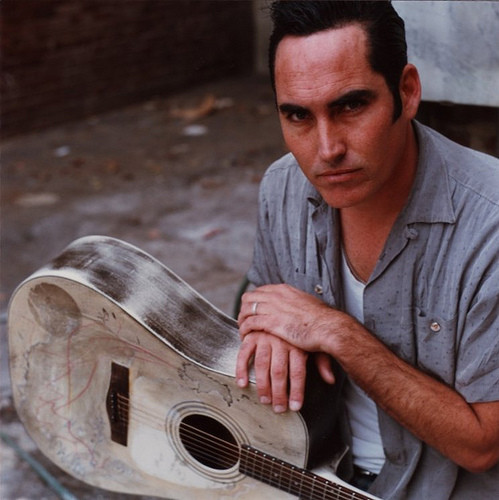


Blogger David Lowman made the point that Knott's musical genius on this album was overshadowed by all of the talk concerning negative subject matter. "Lost...in the discussion of the dark and eerie content is Knott’s remarkable penchant for memorable hooks and unforgettable melodies," Lowman wrote. "In fact...the album is really a wonderful collection of sensible pop songs filtered through a darker and more transparent songwriting style."


Shaded Pain was recorded at 3-D Studios in Costa Mesa, CA and Asylomar Studios and was produced by Chris Brigandi. Brigandi and Joey Taylor served as engineers on the record. Colleen Hammond took the pictures while Ed McTaggart of DA was responsible for art direction and layout.  


Let's delve a little deeper into the backstory of L.S.U.'s frontman. He is enigmatic, multi-talented and extremely complicated. He's also an alcoholic, he's survived a heart attack, and he is remembered for some of the wildest live performances in the history of Christian rock and roll (one of which I personally witnessed). Knott has either participated in and/or formed ten different bands. They are The Hightops, Lifesavors (or Lifesavers), L.S.U. (aka Lifesavers Underground), Bomb Bay Babies, Idle Lovell, Michael Moret, Aunt Bettys (originally Aunt Betty's Ford), Cush, Strung Gurus and Struck. He has 19 solo albums to his credit. He's either prolific or suffers from attention deficit disorder. 


In addition to the extremely memorable festival performance that I witnessed (described here), I was also on hand as our then-youth pastor booked and welcomed Mike for a solo concert at a youth club-type venue that was a part of our church in Taylors, South Carolina. This would've been in the early 2000s. The show drew a small number of die-hard fans. Knott was quiet and aloof off stage. He seemed shy and retiring. I remember him offering lots of CDs and paintings for sale (yes, he's an artist in more ways than one) at his merch table. There was a $5 or $10 optional donation at the door for that particular concert. Worried that he wouldn't do well financially due to the small crowd, I specifically remember dropping a check for $100 into one of the buckets. That was as good as I could do at the time. I think that's the most I've ever paid to attend a concert. 


I know that ranking this album so low on this list is going to earn me a lot of criticism and maybe a few death threats. And while I don't think I deserve the death penalty, the anticipated criticism is probably warranted. After listening to this record again for the first time in many moons (a little Native American lingo for you there), it's pretty fantastic, at least from a musical standpoint. David Lowman said it's "one of the finest and most important albums ever released by a Christian label." The knottheads website calls it "THE classic Knott album." J. Edward Keyes with allmusic.com calls it a "cult classic." A blog called The One Hundred said it has only gotten better with age. Yeah, it should've been ranked higher on this blog (not that that really matters). 


You might be wondering whatever became of Brian Doidge. Well, according to the most recent information available online, he got a job with a company that manufactured speakers and power amps. Came in on an entry-level and worked his way up to supervisor. After surviving an alcohol-induced, near-death incident, he checked into a 30-day treatment program and got sober. "Sobriety is a big part of my life now, it has to be," Doidge said, revealing that he was living full-time in a "sober living home" (in 2009) and was helping other residents to get their bearings. 


"There are other people here just like me that are taking it day by day," he said. "I just go to work, go to the movies, don’t drink, hang out at the pool, ya know the normal stuff that everyone else does. I was having trouble eating when I drank, and now just being able to eat is a blessing, and going to the movies instead of just having a movie as background noise in a hotel room. It’s a lot of little things, like being able to look people in the eye when you talk to them. I was always ashamed of what I was, I never looked people in the eye, I was ashamed to talk to God, let alone other people. Now, life is good, I have no complaints at all."

Hopefully, Doidge is still doing well. If you know, please leave a comment below.


Mike Knott is also a painter, frequently signing his artwork under the name 'Gerard'. His works have been used for cover art on many of his own releases as well as projects by The Choir and others. 


On Shaded Pain, Knott not only literally painted the cover art...it's been said that he also "painted" beautiful soundscapes with gritty lyrics and superb song structures on this album, the darkest and "most honest" album ever released to the Christian market at that time.


fun facts...

• L.S.U. stands for LifeSavers Underground, not Louisiana State University.

• Shaded Pain was re-released in 1993 on Metro One Records with a slightly different cover and extra artwork.


Saturday, May 11, 2019

Concert Review: STRYPER - 5/10/19 - Greenville, SC


I can finally say that I've seen the boys in yellow and black up-close-and-personal. Yes, I attended my first Stryper show last night. I know, I know...I'm a little late to the party.

Back in 1985, when I was a very green DJ working my very first radio gig, I came into the station one day and saw a note about a phone interview that I was to conduct. The name: Michael Sweet. Yeah, my first-ever live, on-air telephone interview was with the lead singer of Stryper at a time when Stryper was blowing up BIG. The purpose of the interview was to promote the band's upcoming show at the Spartanburg Memorial Auditorium. I remember being excited and nervous. I probably made a mess of the interview, but I got 'er done. 

I was not able, however, to go to that concert (probably had to work). So here I was, 34 years later, attending my first Stryper show. Better late than never, right?

My son is quite an amazing rock guitarist and music enthusiast himself (two of his biggest favorites are Metallica and Keith Green), and he grew up on To Hell with the Devil, so buying him a ticket was a no-brainer. It was his suggestion, of course, that we enjoy a pre-concert fueling at Genghis Grill. I'd never experienced a meal there, and it was quite enjoyable. Five stars!

So as we're pulling up to The Firmament (hey, there's a Biblical word for you), I notice several, um, older Americans who had somehow managed to pour their portly frames back into old Stryper t-shirts that they still owned. So that was cool. Turns out I was overdressed in my black Furman University polo shirt. Not many collared shirts in this crowd. 


The Firmament is a midsized music club with a large, open floor and a few booths along the wall. They sell a lot of beer and pizza by the slice. We decided to stand as close to the stage as we could, but later in the evening, my 56-year-old self was wishing we had snagged a booth. [I used to stand up for concerts at festivals all day and all night...what's happening to me?!] A few people near us were downing beers like they were M&Ms...but there was no unpleasantness, thankfully. As drinkers go, these were the friendly kind. I've got to believe that overall, The Firmament probably saw a dip in alcohol sales last night with all the Christians in the crowd. 

It was pretty much a packed house. At one point, an emcee/promoter type guy proudly gave us the headcount: 501. This guy was a little clueless about the makeup of the audience (or just didn't care) as he also told us that he got to hear Stryper's soundcheck and we were "in for a big f---ing treat." 

I'm going to have to throw a flag on The Firmament's lights. My church has a better light show on Sunday morning. This stuff was just a notch or two above what you can buy at Radio Shack or Spencer's.  


Osara


We were a few minutes late and missed the opening opening band - a group called Osara. We were about ten or 15 minutes late, so they must've only played 2 or 3 songs. So I have no idea what their music sounds like. But I did walk past their merch table. Apparently, tattoed boobs help sell CDs...let's just leave it at that.


Fiftywatt Freight Train


The band that preceded Stryper was Charlotte's Fiftywatt Freight Train. I'll just say that I'm not interested in ever boarding that train again. They covered a Metallica song (and did a respectable job on that according to my son). But overall...no. The guitarist threw a few picks into the crowd and nobody cared. Bless his heart.


Stryper


Stryper finally took the stage at about 9:45 and immediately launched into Soldiers Under Command. Suddenly it was 1985 all over again, with the crowd singing along with full-throated enthusiasm. Yes, this is why I came to The Firmament tonight. 

The band was tight and they pushed the club's sound system to the limits of its capabilities. In fact, distortion was an issue from time to time. This was, after all, the very first night of the tour, so maybe they were just working the bugs out. But we might've been able to enjoy the nuances of the musical performance a little better if the sound guy had lowered the decibel levels a little. And now I sound like I'm even older than my 56 years. I'm using words like nuance while describing a Stryper show. Maybe I need to turn in my blogging license. 


The stage set was pretty cool for a smaller venue. The band logo and album art were featured. The famous yellow and black stripes appear mostly on the group's instruments these days, not on their stage clothes. Dressed mostly in black, the boys appear to be in great physical condition. They do look a little older...but that's probably because they are. The hair on the three original members looks like it's been damaged from so many years of processing and copious amounts of hair spray. I notice these things because my daughter is a cosmetology student who's about to graduate from a local Career Center (shout out to Annie!). But seriously, the guys are looking great. 


The new bassist, Perry Richardson, sports a hairdo that is just so over-the-top it's ridiculous. Is it a wig? I don't think so, judging by the way he whipped his head all over the place. With that hair, I kept trying to picture him just going into a Denny's and sitting down to order a meal from a waitress. She would probably think she was being punked or something. You just don't see hair like that on a guy his age very often. Or ever.


Michael Sweet is quite the showman. He's an active frontman, often engaging the crowd. The way he exhorted the audience to lift our hands, sing along and "put your hands together," I started wondering if he has a future as a worship leader (kidding). I came away very impressed with Michael Sweet as a guitarist. Oz Fox is, of course, incredible and is the band's official lead guitarist, but Michael more than held his own. I think he's underrated as an axeman. 


Sadly, he just can't hit those crazy high notes anymore - you know, men...the ones that made your balls hurt? But that's to be expected. If he could still sing those other-worldly notes at his age, he'd be considered a total freak of nature. Michael poked fun at himself for needing an iPad for song lyrics. And after asking for a show of hands of people who were seeing Stryper for the first time, he joked, "So did it just take you guys 35 or 40 years to get around to it?" 


Robert Sweet (AKA The Visual Timekeeper) works the hardest, physically, of any of the musicians on stage. His drum set-up is massive and impressive, as is his mastery of it. He was in constant motion and had fans blowing on him to keep him cool. This also had the effect of his famous blonde locks blowing in the wind like a supermodel at a photo shoot. The boy's not as pretty as he once was, but he still looks like a rock star.


The group powered their way through a number of Stryper's greatest hits, including Loving You, Calling On You, Free, Lady, In God We Trust, Always There For You, and Sorry. Loved it. 

My least favorite part of the evening (outside of the Fiftywatt disaster) was Stryper's extended set of secular covers. Not being a fan of mainstream rock (or even a casual listener), this part of the night was wasted on me. They covered hits by Boston, KISS, Van Halen, Queen, Firehouse and Judas Priest. These were described by Michael Sweet as songs that influenced them and inspired them to be musicians in the first place. He told a story about spotting a member of Judas Priest in the crowd at a Stryper show one time and being stoked about that. "We're huge Priest fans," he said. "We cut our teeth on Priest." OK...


My son enjoyed their covers of a Black Sabbath song and an Ozzie Osbourne tune. For me, those precious minutes would've been better devoted to more Stryper favorites that I didn't get to hear last night. But that's just me. I went to The Firmament armed with earplugs and the only time I used them was during the secular set. I just wasn't as interested.


Of course, a very cool tradition was revisited as pocket New Testaments were thrown into the crowd from time to time. These were emblazoned with a special "History Tour" logo. Throwing the Bibles was the only thing about the show last night that was overtly evangelistic. Although I must say, a very spiritual moment seemed to be happening during the group's rendition of the song Yahweh. Hands were raised and the crowd sang along in a manner that could only be described as worshipful, almost reverent. Nice moment near the end of the show.


The guys said goodnight and the stage emptied - without us hearing To Hell With the Devil. Needless to say, an encore was planned ahead of time and when the boys returned from backstage, we were treated to the song that most of us really wanted to hear. Box checked.


All in all, an enjoyable way to spend about eighty bucks (for two tickets). We blew off the merch table afterward, but I did get to reconnect and visit with several friends that I discovered were there as well - including a neighbor, an old bandmate, and Mr. Rob Cassells himself (from the Rob Cassells Band, of course). 

I also saw a listener to my old radio show, Rock of Ages on Rock 101, WROQ. I remember this guy because he used to call in a lot and he won a ton of CDs. I'm pretty sure I also saw a guy across the floor who served as my call screener for a number of years. By the way, I'm probably the only guy who ever played Stryper on the radio here in Greenville. So there's that.

On the way to the car, my son was actually recognized by one of his Instagram followers. He runs a meme page called Deuteronomemes that has over 128,000 followers. This woman recognized him and came over in the parking lot to say hi and tell him how much she enjoys Deuternomemes. She and her family had driven three hours from Tennessee to come see Stryper. Cool stuff.

So there you go - my first, and probably last, Stryper show. Rock and roll was played, hair was slung, Bibles were tossed, and a good time was had by all.


Monday, April 15, 2019

#270 NEVER FOR NOTHING by Margaret Becker (1987)

NEVER FOR NOTHING by Margaret Becker (1987)
Sparrow | SPD 1134


Producer:
Billy Smiley


File Under: Chick Rock/CCM


Time Capsule-Worthy Track:
Never For Nothing


She got her start writing songs and opening for the likes of Steve Camp and Rick Cua at the height of their music careers. But when this, her debut, hit store shelves, Christian rock devotees finally had a legitimate female rock chick to call their own. One with a muscular but well-trained voice...and she played guitar! 

Pat Benatar? Ann Wilson? Phhtt. We had Maggie B.


Margaret Becker was raised Catholic in Bay Shore and East Islip, two coastal hamlets on Long Island, about an hour and 20 minutes from the heart of New York City. Becker played in coffeehouses, taught music, and took opera lessons. She moved to Nashville in 1985 shortly after graduating from James Madison University with a communications degree in hand. The plan was to pursue a career in music. 

[Sidebar: This story is typical, but I never cease to be amazed at how creative people - whether musicians, actors, comics, whatever - will simply pull up stakes and relocate to LA, New York or Nashville in order to follow their dreams. I was a musically creative and talented kid if I do say so myself, but I would never have had the nerve to just throw caution to the wind and uproot my life in order to chase a dream. I'm thinking that would require a large dose of reckless ambition. It worked for Margaret Becker and lots of others. But for every Margaret Becker, there are multiplied thousands of waitresses, bartenders, and baristas who tried a similar plan and it just never worked out for whatever reason. #risky] 


Margaret's gamble paid off when she landed a gig with Sparrow Records as a staff songwriter. She ended up co-writing a handful of songs that were recorded by Steve Camp and served as a backing vocalist on Rick Cua's Wear Your Colors Tour. Then she was featured in a duet with Camp - the title song from his One on One album. After that, it was time for Sparrow to give Becker her own shot which came in the form of 1987's Never For Nothing.


Album covers were hugely important back in the day, especially when deciding whether to plunk down your cash on a new artist you'd never heard before. The album cover was the first impression and had a lot to do with making the sale. The Never for Nothing cover photo alone made a statement. The hair, the earrings, the color palette, just the attitude emanating from Becker in that cover photo let us know that this wasn't going to be another Kelly Willard or Michelle Pillar album. It wasn't even Amy Grant territory. This was a woman who really knew how to rock. And she got extra points for those humongous shoulder pads. This was, after all, the 1980s. Art Direction was by Barbara Catanzaro-Hearn, Stan Evenson came up with the design, and that striking photo of Margaret Becker was taken by Steven A. Heller.


Becker's rock 'n roll vocal chops were evident on songs such as Fight for God, Standing on Top of the World, Break the Silence, and Giants Will Fall. In fact, key lines from several songs worked perfectly as arena rock-style chants in concerts...

Fight for God!

Standing on Top of the World!

Giants Will Fall!

Later, Becker's work became much less bumper stickery and much more nuanced and thoughtful. It's very difficult if not impossible to imagine 2019 Margaret Becker pumping her fist and belting out Fight for God! to a concert audience. But, again, this was the 80s.  


There were a few songs, however, that were not standard CCM fare from a lyrical standpoint. Those tracks gave us a glimpse of where Becker's songwriting would eventually head. What You Feel addressed the fact that love is a decision and not based on feelings. 

You said that you would stay committed
You even gave your solemn word
Looking back it seemed too simple then
When passion was your nerve
Standing at a crossroads
It's either search or fight
Go looking for a new love
Or stay and make this one right

I've heard that love is sacrificial
It's a decision of the will
Sometimes you have to push those feelings
Beyond the point of what you feel
Love in its purity
Is labor of the heart
And it will always stand the test
When feelings fall apart

What you feel
May be real
But that doesn't make it wrong or right
Vows you've made
Can't be vague
Commitment is black and white
Oh, what you're feeling isn't right

Break the Silence speaks of a "house where the heart of love once beat so strong" and encourages transparency and honesty.

Break the silence
Dare to be exposed
Break the silence
Shatter the common mold


White Heart's Billy Smiley produced Never for Nothing. Some of the musical choices give the project a somewhat dated, very-80s sound in spots. And I hate to be redundant, but hey...it was the 80s, after all.

Becker's voice was often favorably compared to the aforementioned Pat Benatar and Ann Wilson of Heart. I remember talking with her for a live phone interview when I worked for HisRadio. I asked her if she ever tired of the comparisons and she said, "No, I take it as a compliment." 


Never For Nothing featured a lot of very accomplished musicians, including bassist Mike Brignardello, White Heart drummer Chris McHugh, guitarists Dann Huff (formerly of White Heart), Chris Rodriguez and George Cocchini. Interestingly, ex-Petra keyboardist John Slick played on one song (Love Was Waiting); Tommy Dorsey played keys on the rest of the album.

A talented and seasoned group of background vocalists participated on this album, including Chris Rodriguez, Billy Smiley, Dave Mullins, Marty McCall (Fireworks, First Call), Peter York, and White Heart's Tommy Sims.  


The album was recorded at a number of studios - OmniSound, Center Stage, Downstage, Bullet, Master's Touch, and Peace In The Valley. It was mixed by David Schober at Mama Jo's and mastered by Steve Hall at Future Disc. Brent King, Doug Sarrett, Jeff Balding, Joe Bellamy, and Mike Psanos all served as engineers on Never for Nothing. 


For many of us, this record maintains a soft spot in our hearts due primarily to three songs: the title track, Sacred Fire and For the Love of You. 

Sacred Fire reached #2 in 1988 on Christian rock charts. It was a great rock track that spoke of being completely committed and sold out to God:

Fire of refining
Fire of discipline
Burn away all my impurities
Fire of consecration
Carefully define
The image of the Holy One in me
I know that I am privileged
To bear the sacred light
So I will lay down everything
To keep the flame alive

Sacred fire
Burn Your mark on me
With Your flame brand the Name
For everyone to see
Sacred fire
Burn your mark on me
I am honored to be set apart
So burn your ownership into my heart


The album's title song was a classic rock ballad. It was encouraging and heartbreaking all at the same time. 

You cried alone by the window
Over the love that you lost
You gave it all
Never counting the cost
Rain like tears beat on your window
Melting your heart to the floor
No love returned
And now you have less than before

It's never for nothing
When you love with no return
It's never for nothing
Light your candle in the darkness
'Cause it's never for nothing

Becker's spot-on, passionate vocal on Never for Nothing helped the song climb to #3 on Christian airplay charts.


For the Love of You was a ballad that presented the idea that we love God not for what He does for us, but just because of who He is.

Been searching deep inside me
To find some hidden clues
About my motivation
For loving You
I know there is the obvious
Your blessings and Your peace
But what if all Your benefits
Were to suddenly decrease?
Way beyond the things I know I will receive
I want my motivations for loving You to be (just)

For the love, for the love of You
Not for what it brings
For the love, for the love of You
Let me do all things
Not for what You'll do
But just for the love of You

It's a theme that has been mined many times by many other artists, but For the Love of You is a well-crafted song and Becker did a really fine job with it. The song reached # 7 on the charts in 1987.


Never for Nothing has been called "an immediately impressive debut" and the fact that it contained three high-charting singles was a strong indication that Margaret Becker would be around for quite a while and would make a lasting impact on Christian radio. She was and she did.


Her sophomore release, The Reckoning, yielded Find Me, Who Am I and Streets of Innocence. Becker began a working partnership with producer Charlie Peacock in 1989 with Immigrant's Daughter. That record contained no fewer than five Christian radio chartbusters. Simple House in 1991 gave us three more hits. Soul came along in 1993 and, with it, four more radio hits (including This I Know and Say the Name). Up next was Grace in 1995 with five more charting singles. Let's face it, the woman has been a machine for Christian radio, just churning out hit after hit after hit. 


Falling Forward in 1998 was the first record Becker recorded without Charlie Peacock in about a decade. This time she went with a trio of producers and they delivered two more charting singles. What Kind of Love in 1999 would be her swan song for Sparrow, ending a very successful partnership with one more hit song (Friend for Life). Becker has appeared on numerous compilations and has recorded specialty albums with other female artists such as Susan Ashton, Christine Denté, Michelle Tumes, Nichole Nordeman, Rebecca St. James, Máire Brennan, Joanne Hogg, Kristyn Getty, and Jennifer Knapp.


Jennifer Knapp (L), Margaret Becker


Knapp, of course, is probably the most famous lesbian to ever escape Contemporary Christian Music (with apologies to Marsha Stevens). Knapp would also be the most vocal and most confrontational former CCMer in LGBTQIA-LMNOP land. So it only stands to reason that eyebrows were raised when Margaret Becker chose to record and tour with Knapp at Christmastime in recent years. And this was no quiet, behind the scenes collaboration. It was much-ballyhooed. The never-married Becker has fully embraced Knapp in a very public way. All it means for sure is that two women recorded and toured together. But rumors have dogged Becker for years, and this does nothing to squelch them. 


A quick perusal of Becker's Twitter feed reveals that she sits, like many of her fellow Nashvillians, on the liberal side of the political divide these days. But one tweet, in particular, demanded attention. On June 26, 2015, Becker tweeted:

SCOTUS: thank you for your work these past few weeks. You've reminded me what is great about this country.

Incidentally, June 26, 2015, was the very day of the Obergefell v. Hodges ruling, legalizing same-sex "marriage" in the United States. 

Interestingly, Margaret Becker recorded the song Make It Right for this album. Kenny Marks' version of the song is perhaps better known but for some reason, the lyrics differ substantially on the two recordings. The Marks version begins...

Every boy wants a girl / Every girl wants a boy

The Becker version replaces that with... 

Everybody wants someone / To give them courage and keep them strong 

It was a bit of a mystery so I reached out to the song's author, Mark Chesshir. "Kenny's version is my original lyric," Chesshir replied, "but he did not use the bridge section of the song. Margaret and I rewrote part of the original lyric for her version and she did the complete song with the bridge."


Okay...but why the need for a rewrite? I mean, we could say, "Well, Becker just wanted to be inclusive and respectful of all the various possible genders and orientations out there." Except that nobody was worried about any of that in 1987. Again, no smoking gun...and Becker's content to just let the speculation grow. “My personal life is private and I’m very happy,” she told Joey DiGuglielmo of The Washington Blade. Concerning Knapp, she said, “I am very supportive of Jennifer and this musical partnership we’ve created and look forward to sharing it with her supporters and mine.”


Sometime around the early 90s, Becker became disenchanted with Protestant Evangelicalism, even though that's where she initially came to genuine faith in Christ. "I got tired of people telling me whether or not I was anointed," she told CCM magazine in 1991. "The clutter of what I should and shouldn't do had run me ragged." So, like Dion Dimucci, she returned to the Catholic church, expressing admiration for the liturgy and a fondness of the prayers she remembered learning as a child.


Becker released a full-length album titled Air in 2008. She's also authored two books and spends some of her time producing younger artists these days.


After all that radio airplay, Becker only won two Dove Awards - and both were connected to 1992's Simple House. But Never for Nothing will always be remembered not only for its songs but as the album that launched a lengthy and stellar CCM career.